Speaker

Plenary Speakers

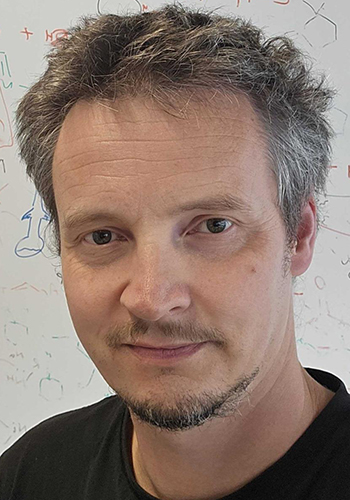
Raphael Rodriguez

Chemical Control of Cell Adaptation
Raphaël Rodriguez is a Research Director at the CNRS and a Principal Investigator at Institut Curie where he holds the Skłodowska-Curie Chair of Chemical Biology. He acquired the knowledge of chemistry and biology from several mentors in the United Kingdom. He leads the Biomedicine Laboratory at Institut Curie and investigates the molecular basis of cancer metastasis. Together with lab co-workers, they discovered the role of iron as a driver of cell adaptation and cell death. He has received a few accolades including the CNRS Silver Medal, the Liliane Bettencourt Prize for Life Sciences, the Klaus Grohe Prize, the Tetrahedron Young Investigator Award and the Charles Defforey Prize. He is a Fellow of the Royal Society of Chemistry and a Knight of the National Order of Merit.

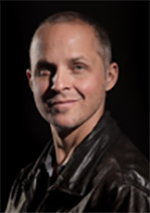
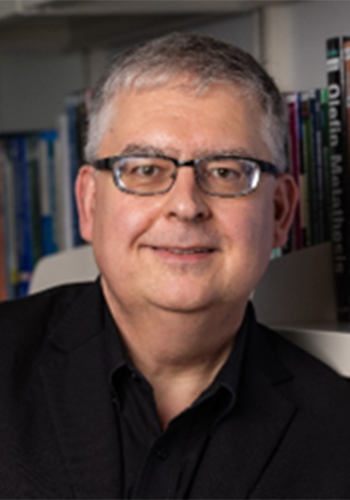
Ivan Huc

Folded Architectures Based on Heterocycles
Ivan Huc has been since 2017 a full Professor at the Ludwig-Maximilians-University (Munich, Germany). He obtained his doctorate from the University of Paris VI in 1994 for work performed jointly at Ecole Normale Supérieure (France) and MIT (USA). He subsequently worked as a postdoctoral researcher and then as CNRS senior scientist at the University of Strasbourg until 1998, when he was appointed group leader at the European Institute of Chemistry and Biology at the University of Bordeaux. His group focuses on the design, synthesis, and characterization of aromatic foldamers and their applications including pharmacological aspects.

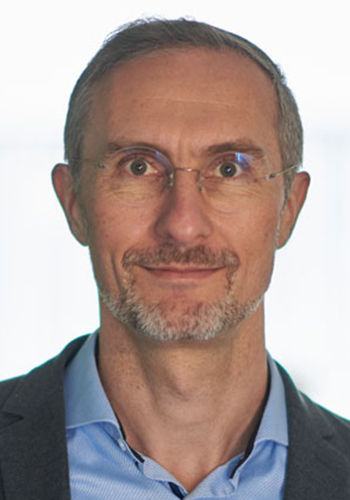
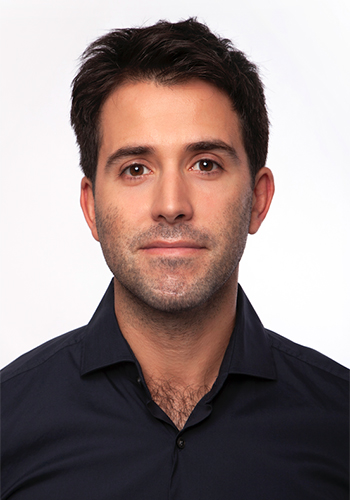
Thomas Carell

The Second Dimension of The Genetic Code
Thomas Carell started his academic career studying chemistry at the Universities of Münster and Heidelberg. In 1993 he obtained his doctorate with Prof. H. A. Staab at the Max-Planck Institute of Medical Research. After postdoctoral training with Prof. J. Rebek at MIT (Cambridge, USA) from 1993 – 1995, Thomas Carell moved to the ETH Zürich (Switzerland) to start an independent group under the mentorship of Prof. F. Diederich. He obtained his Habilitation in 1999 and his first full professorship in 2000 at the Philipps-Universität in Marburg (Germany). In 2004, he moved to his current position, the Ludwig-Maximilians-Universität (LMU) in Munich (Germany), where he is operating a research group with a focus on nucleic acid and prebiotic Chemistry. Thomas Carell obtained the Leibniz Award from the Deutsche Forschungsgemeinschaft in 2004. He is a member of the German National Academy Leopoldina and the Berlin-Brandenburgische Academy of Arts and Sciences. Thomas Carell is the recipient of the Cross of Merit from the Federal Republic of Germany and since 2019 member of the supervisory board of BASF SE.

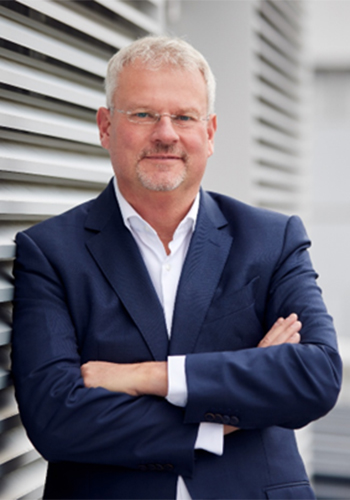
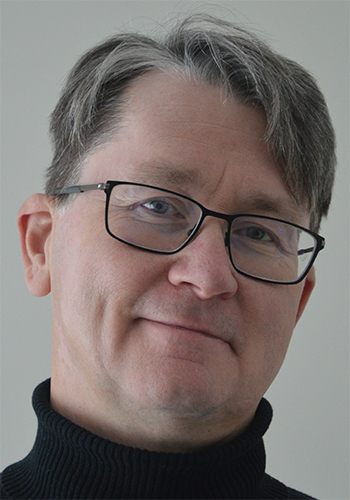
Bill Morandi

New Concepts for Atom and Functional Group Transfer
Prof. Bill Morandi studied Biology and Chemical Biology at ETH Zürich and received his PhD in organic synthesis with Prof Erick M. Carreira. Following a postdoctoral stay with Prof. Robert H. Grubbs at Caltech he became a Group Leader at the MPI für Kohlenforschung. He returned to ETH Zürich in 2018 as a Professor of Synthetic Organic Chemistry. His research program targets the design and development of new catalytic reactions for the synthesis of small molecules and materials, as well as the valorization of renewable feedstocks and waste material. He has received numerous awards, among them the Mukaiyama Award, Tetrahedron Young Investigator Award, a Novartis Early Career Award in Organic Chemistry, the Carl Duisberg Memorial Prize from the German Chemical Society and a selection as a C&EN's Talented 12.

László Kürti

Strain, Weak Bonds, Rearrangement, and Nitrogen Transfer: Harnessing Functionalized Hydroxylamines in Modular Heterocycle Synthesis
László Kürti is an internationally recognized organic chemist known for contributions to reagent development and synthetic methodology. Born and raised in Hungary, he earned his Ph.D. at the University of Pennsylvania under the mentorship of Professor Amos B. Smith III, followed by postdoctoral training with Nobel Laureate Professor E.J. Corey at Harvard University. Now a Full Professor at Rice University, Dr. Kürti leads a highly productive research group devoted to the development of powerful new reagents and strategies for building complex molecules. His lab has introduced numerous metal-free and catalytic methods for C–N and C–C bond formation, particularly in electrophilic amination, heterocycle synthesis, and nitrogen-rich frameworks. These innovations have enabled streamlined access to medicinally relevant amines, biaryls, and diverse heterocyclic scaffolds—core structures in pharmaceuticals, agrochemicals, and materials science. A passionate educator and prolific author, Dr. Kürti has co-authored three textbooks, including the widely used Strategic Applications of Named Reactions in Organic Synthesis. His dedication to mentorship is evident in the dozens of undergraduate, graduate, and postdoctoral researchers he has trained so far—many of whom have gone on to distinguished careers in academia and industry. Outside the lab, Dr. Kürti is a committed advocate for scientific outreach and community building. He is the faculty sponsor of the Fun with Chemistry program, which reaches approximately 8,000 K–12 students each year with hands-on science demonstrations. He also founded the Winter In-Person Organic Symposium (WIPOS), an annual international event that highlights both established leaders and emerging voices in synthetic chemistry. Since launching his independent career in 2010, Dr. Kürti has delivered more than 230 invited lectures around the world at leading conferences, symposia, universities, as well as at biotech and pharmaceutical companies. He has more than 60 peer-reviewed publications in leading journals such as Science, Nature Chemistry, JACS, and Angewandte Chemie. His honors include the 2025 Ross M. Brown Investigator Award, the NSF CAREER Award, the Amgen Young Investigators’ Award, and a JSPS Fellowship. Outside of academia, Dr. Kürti enjoys traveling with his wife and son and learning about different cultures and histories. He has visited more than 40 countries across five continents and 42 states within the United States.

Daniele Leonori

Novel Synthetic Methods in Photochemistry and Photocatalysis
Daniele obtained his PhD in Organic Chemistry from the University of Sheffield (UK), and did postdocs with Magnus Rueping and Peter Seeberger. He then joined the group of Prof. Varinder K. Aggarwal (University of Bristol) as a Research Officer. Daniele began his independent academic career at the University of Manchester in 2014 as a Lecturer, was promoted to Reader in 2018, and to Professor in 2020. In 2022, he was appointed W3 Professor and Chair of Organic Chemistry at RWTH Aachen University. Research in the Leonori group focuses on the development of novel synthetic methodologies based on radical and photochemical strategies.
Speaker

BDSHC Speakers

Tibor Soós

The Metal-Free Option in Synthetic Developments: Unnecessary Restriction or Opportunity?
Tibor Soós is a native of Hungary and obtained his Ph.D. degree from Eötvös University, Budapest, in 1998. He subsequently worked as an NSF post doctoral fellow in Salt Lake City, USA in 1999 and then as a Humboldt fellow in Erlangen, Germany 2000-2001. In 2001, he was appointed to an academic position at the Hungarian Academy of Sciences and founded his research group (Organocatalysis Research Group). His research interest is mechanistic and synthetic organic chemistry including organocatalysis, asymmetric synthesis and total synthesis. He has been served as a Scientific Consultant to many chemical and pharmaceutical companies, including EuroAPI, XIMO/Verbio.

Peter Abranyi-Balogh

Beyond Uniformity: The Colourful Chemistry Between Small Molecules and Proteins
Péter Ábrányi-Balogh obtained his PhD degree in EGIS Pharmaceuticals in 2014 after having synthesized more than hundred β-carboline derivatives and studied the reaction mechanism of their formation by DFT computations. Then he joined the Medicinal Chemistry Research Group at RCNS led by György M. Keserű. His interest remained for the synthesis of natural product related compounds and the development of multicomponent reactions. Now, he is leading a laboratory of the research group responsible for covalent modification of therapeutic proteins and developing new methodologies and modalities based on protein labelling for medicinal chemistry and chemical biology purposes. He is integrating his research interests in the field of organic and medicinal chemistry by repurposing chemical reactions for the modulation of protein targets. Being a project leader he manages the daily work of several BSc, MSc and PhD students and collaborates with international partners. He is also an honorary associate professor at the Budapest University of Technology and Economics teaching organic chemistry.

Javier Mateos

Cationic Selenuranes – Structure and Reactivity of Bench-Stable Se(III) Reagents
Javier was born in Catalonia, Spain. He earned a MSc in Organic Chemistry from the Universitat de Barcelona. In 2017, he moved to Italy to pursue a PhD at the Università degli Studi di Padova with Prof. L. Dell’Amico. He focused on elucidating the mechanisms of photochemical reactions and developing organic photocatalysts. In 2022, Javier relocated to Germany for postdoctoral research at the Max-Planck-Institut für Kohlenforschung, joining the group of Prof. T. Ritter. His work addressed the use nitrate reduction strategies applied to aryldiazonium chemistry. Javier began his independent career as a tenure-track Assistant Professor at the Institut für Organische Chemie, Universität Wien in October 2024. His research group focuses on the development of synthetic methodologies that exploit main-group elements in unconventional oxidation states.

Marko Hapke

Regioselective Heterocycle Synthesis: De Novo and Via Postfunctionalization
Marko Hapke earned his diploma and PhD degree with Prof. P. Köll and Prof. A. Lützen at the Carl von Ossietzky University in Oldenburg, Germany. After his postdoctoral studies with Prof. J. F. Hartwig at Yale University, USA, he joined the group of Prof. U. Rosenthal at the Leibniz Institute for Catalysis (LIKAT) in Rostock, Germany, and became independent group leader. Following his habilitation, he became Professor for Catalysis at the Johannes Kepler University in Linz, Austria, affiliated with the LIKAT as external researcher. He is currently also the interim head of the Institute of Inorganic Chemistry at JKU.

Radek Cibulka

Photoredox Catalysis with Flavins and Their Anions
Radek Cibulka was born in the western part of Bohemia. He received PhD degree in 2002 and habilitation in 2009 from University of Chemistry and Technology, Prague (UCT Prague). In 2003, he spent one year as a post-doc at University of Regensburg with Burkhard König. Now he is on the position of full professor at the Department of Organic Chemistry at UCT Prague. He received many awards, including Alfred Bader Prize or Rudolf Lukeš Prize from Czech Chemical Society, Award of the Minister of Education, Youth and Sports of the Czech Republic and Chemistry Europe Fellow. His research is focused on photoredox catalysis, organocatalysis and flavin redox systems.

Tomas Slanina

Fluorophore-Based Dynamic Covalent Photochemistry
Tomáš Slanina is an Associate Professor at Charles University and a senior group leader of the Redox Photochemistry group at IOCB Prague. Previously, following his MSc studies at Masaryk University, he joined a joint PhD program between his alma mater and the University of Regensburg, under the supervision of Professors Klán and König, graduating in 2015. Subsequently, he completed two postdoctoral stays, first with Professor Heckel, at Goethe University, and then with Professor Ottosson, at Uppsala University. Currently, his research interests lie at the intersection of photo-, organic and radical chemistry and spectroscopy.

Peter Kisszekely

Mechanochemistry – an Old Tool Revived for Novel Catalytic Applications in The Synthesis of Heterocyclic Compounds
Péter Kisszékelyi received his PhD in chemistry from the Budapest University of Technology and Economics (BME) in 2021 under the supervision of Dr. József Kupai. He subsequently joined the group of Prof. Radovan Šebesta at Comenius University Bratislava as a postdoctoral researcher and is currently an assistant professor there. His research interests include novel catalytic methods in synthetic organic chemistry, with an emphasis on sustainable applications and a current focus on mechanochemistry.

Martin Putala

Structural Modification of Coumarins: Access to Fluorescent Probes for Bioimaging
Martin Putala received his PhD in organoelement chemistry in 1993 at Lomonosov Moscow State University. He completed post-doc stays at University of Geneva with Peter Kündig and at University of Regensburg with Albrecht Mannschreck. Then, he started his research group at Faculty of Natural Sciences, Comenius University in Bratislava, where he holds the position of full professor at the Department of Organic Chemistry. His research focuses on the development of stereoselective cross-couplings and C–H activations and on structure-properties relationship of materials for organic (opto)electronics.

Janez Cerkovnik

Janez Cerkovnik, PhD, is a Professor of Chemistry at the University of Ljubljana, Faculty of Chemistry and Chemical Technology. He received his chemistry degree in 1987 and completed his PhD in Chemistry at the University of Ljubljana in 1993, under the supervision of Prof. Božo Plesničar, focusing on reactive intermediates formed during low-temperature ozonation of organosilicon compounds. As a postdoctoral researcher, he worked as a research associate with Professor Gary H. Posner at Johns Hopkins University in Baltimore, MD, USA. His main research interests include studying reaction mechanisms involving oxygen, ozone, hydrogen peroxide, and polyoxides as oxidants. Recently, he has also been developing chemical tools to predict reactivity in different chemical systems.

Nejc Petek

Unique Reactivity of Copper Complexes in Photoredox-Catalyzed Construction of C–S Bonds
Nejc Petek received his PhD in chemistry in 2021 at the University of Ljubljana (UL) under the supervision of professor Bogdan Štefane and completed his postdoc at the University of Johannes Gutenberg in Mainz. He obtained the title assistant professor in 2024 and is currently working at the Faculty of Chemistry and Chemical Technology UL. His research interests include developing novel synthetic methods in heterocyclic chemistry with emphasis on visible-light-induced transformations and construction of C–S bonds, as well as early development of biologically active compounds.